
Measuring What Moves People
The head of Instagram just told a $250 billion industry it's been measuring the wrong thing. Adam Mosseri called follower count the most misleading metric in social media. For a decade, influencer briefs, brand partnerships, and campaign valuations have been priced off a mirage.
To be fair, he's been building toward this for a while. In September, Instagram rebuilt its navigation bar around DMs and Reels and pushed the post button into a corner, a redesign Mosseri explained by saying "almost all of that growth has been driven by DMs, Reels, and recommendations." The product changed before the metric language did.
The data behind the call-out is stark. Socialinsider analyzed 70 million posts across Instagram, TikTok, Facebook, and X and found Instagram's median engagement rate sitting at 0.48%, with average comments per post down 16% year over year on Instagram and 24% on TikTok. Likes are softening on the same curve. The two metrics moving the other way are shares and saves: shares are up 45% on TikTok and 12% on Instagram in the same period. The behavior has moved off the surface of the post and into the actions the algorithm reads as quality signals.
The New Scoreboard
The new scoreboard runs on two pillars. Reach is what carries a single idea across markets and into feeds built for discovery. Distribution is awarded by the platform once it decides the work is worth moving, regardless of how many people follow the account. A small account can now outrun a large one on a single post, because the algorithm rewards the content, not the follower base. Resonance is the second pillar. It is what makes a person save a post, send it to a friend, or return to it repeatedly. One pillar measures distance. The other measures hold. A campaign can score high on the first and register nothing on the second, and the gap between them is what the follower-count era was never built to show.
Audiences are pushing in the Resonance direction too. Sprout Social's Q2 2025 Pulse Survey found that 57% of global social media users say they want brands to prioritize original content series over one-off posts. A series is something a person comes back to. The content that wins is the content that earns the return visit, and the return visit is now a measurable event.
The “Verified-Human” Tier
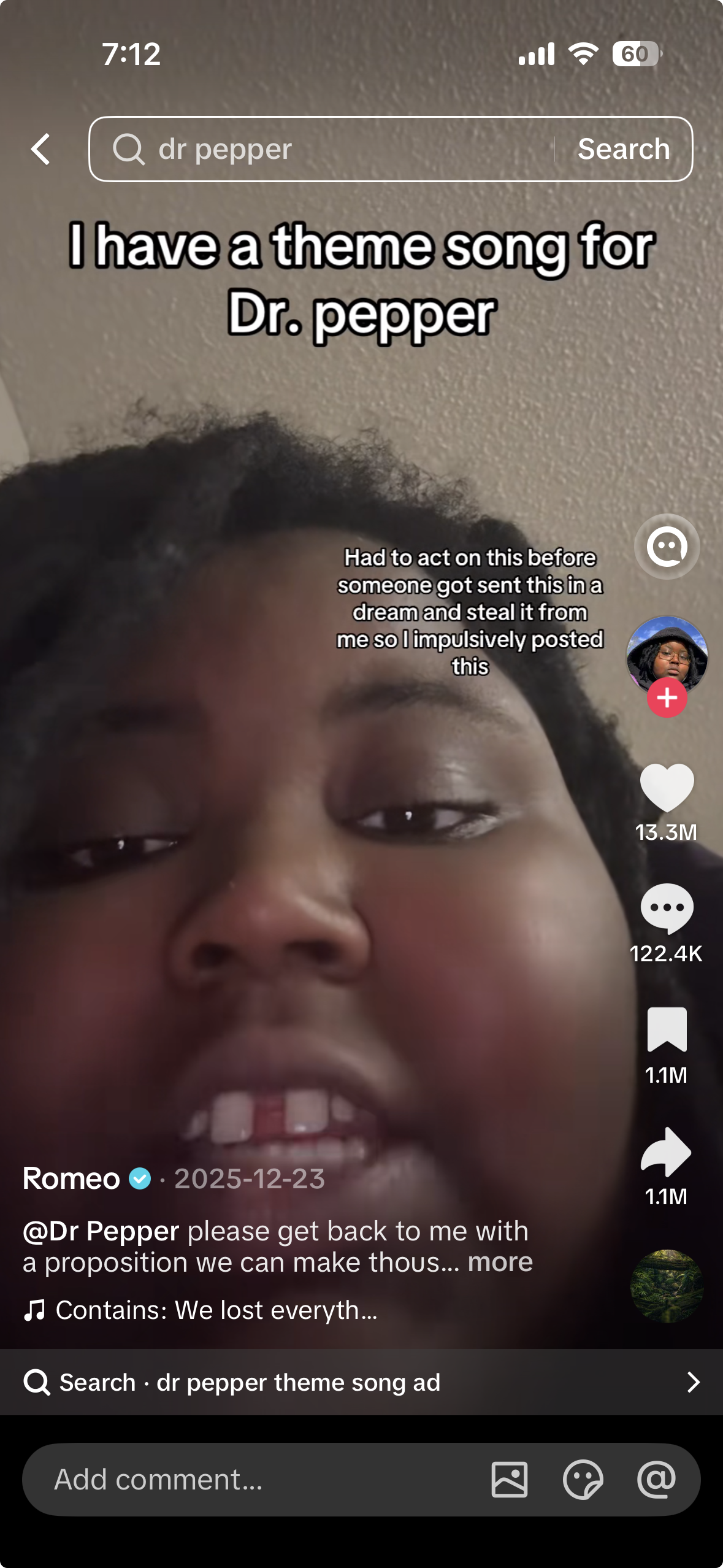
Romeo Bingham, a 26-year-old creator from Tacoma, wrote a Dr Pepper jingle and posted it as an 11-second TikTok. "Dr Pepper, baby, it's good and nice." The post pulled 42 million views, 5 million likes, and over 300,000 saves within weeks. Dr Pepper's CMO Drew Panayiotou said the company noticed within days of Bingham tagging the brand.
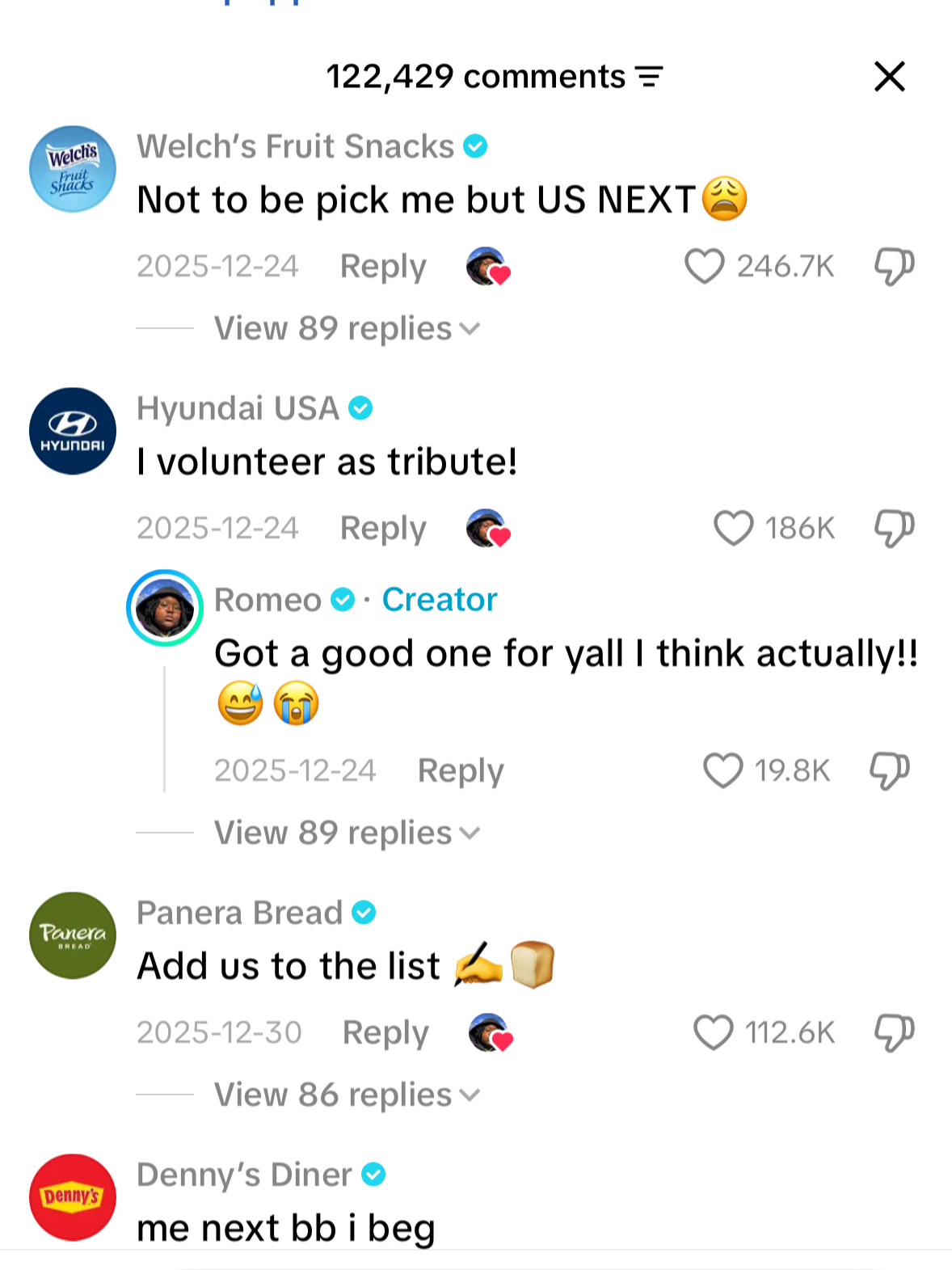
Soon after, the jingle was running as a paid commercial during the 2026 College Football Playoff National Championship, which averaged 30.1 million viewers on ESPN. Bingham received on-screen credit and a signed deal. More than 35 verified brand accounts, including Wingstop, commented on the original TikTok asking for jingles of their own. Bingham's TikTok following went from roughly 100,000 to more than 1 million in the same window.
The mechanic is the argument. Dr Pepper did not engineer the moment, cast the talent, or fund the distribution. The 5 million engagements and 300,000 saves came from audiences deciding the jingle was worth their attention. The brand's job was to recognize the signal and ladder up. A brand watching follower count would have seen a 100,000-follower account and moved on. A brand watching save velocity saw a national campaign.
From Social Media to Sharing Media
Lia Haberman, who teaches social media and influencer marketing at UCLA Extension and writes the industry newsletter ICYMI, has framed Instagram's 2026 shift as a move from social media to "sharing media." Where Mosseri describes a platform mechanic, Haberman names a change in behavior: people now post to give other people something to talk about. Meta has reported that DM activity on Instagram rose 15% year over year in 2025, and the platform now treats private forwarding as one of its most powerful ranking inputs.
Mosseri's statement was the platform's confession. The metric that defined the last decade of social media won't predict the next one. To lead, brands will need to drop follower count as the top-line and treat shares and saves as primary signals. The new metric is what attention does after it lands.