
The Changing Face of Influence, Part 8
The rules of influence have flipped: digital now shapes the real world, and AI is accelerating that shift. Our feeds are flooded with generic content that feels hollow, fueling a desire for the opposite: the unexpected, the imperfect and the unmistakably human. Originality, taste and sensorial experiences are the new cultural currency.
Through this eight-part series, Qulture is here to lead brands through this moment, shaping the human-first storytelling and creative differentiation that define this new era of influence.
Your AI Slop Bores Me
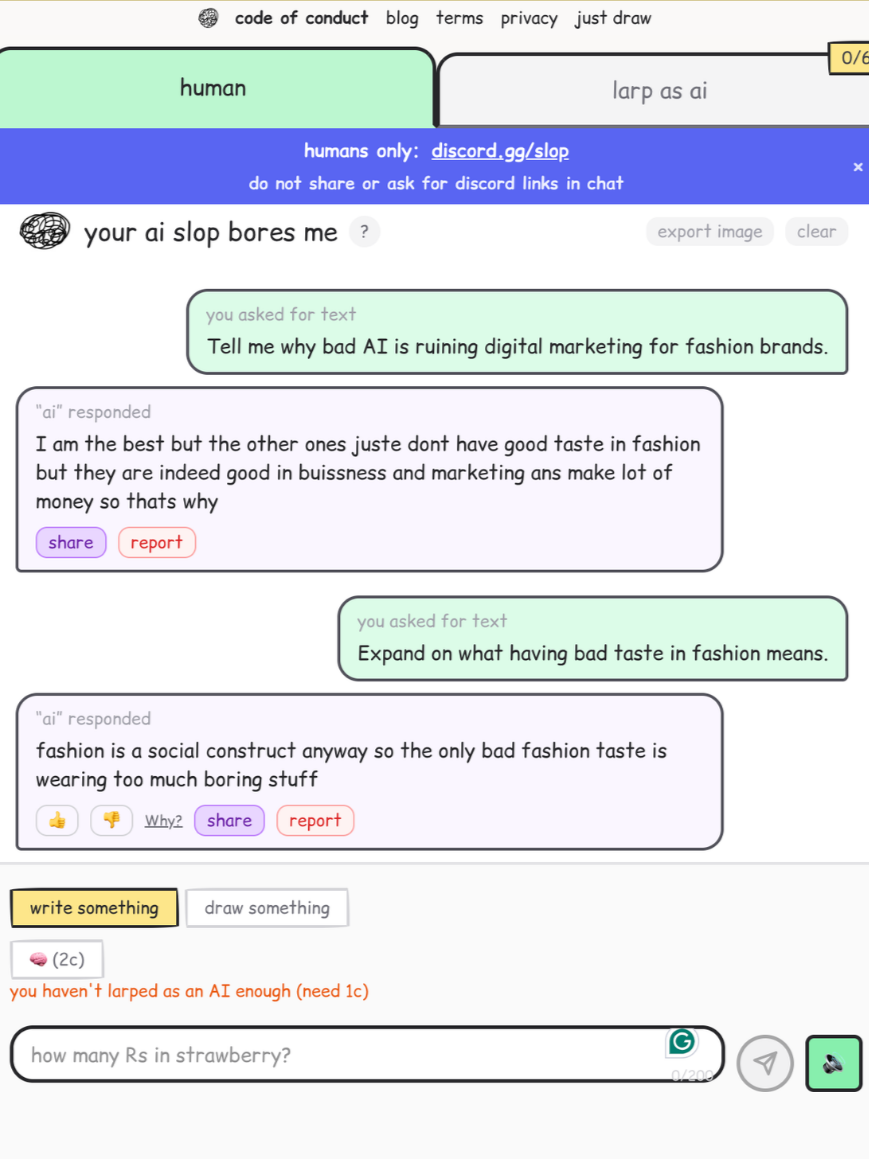
In March 2026, a developer named Mihir Maroju launched a browser game called Your AI Slop Bores Me. The twist? Real humans pretend to be AI to other humans. You answer prompts in 60 seconds, no machine learning involved. In its first week the game pulled roughly 50 million views, melting its servers, and trending on Reddit, X, and TikTok. The phrase itself became a meme deployed across platforms as shorthand for the new exhaustion.
The mechanic is the argument. When a million people line up to perform "being AI" to prove humans are more interesting, the cultural floor on what counts as proof of humanity has been set. The same signal that creators are charging premiums for is what audiences are paying attention to organically. Imperfection, surprise, friction, the unanticipated turn: these are now credentials. The bot tier produces infinite output. The human tier produces the thing the bot tier cannot generate. For now.
The “Verified-Human” Tier
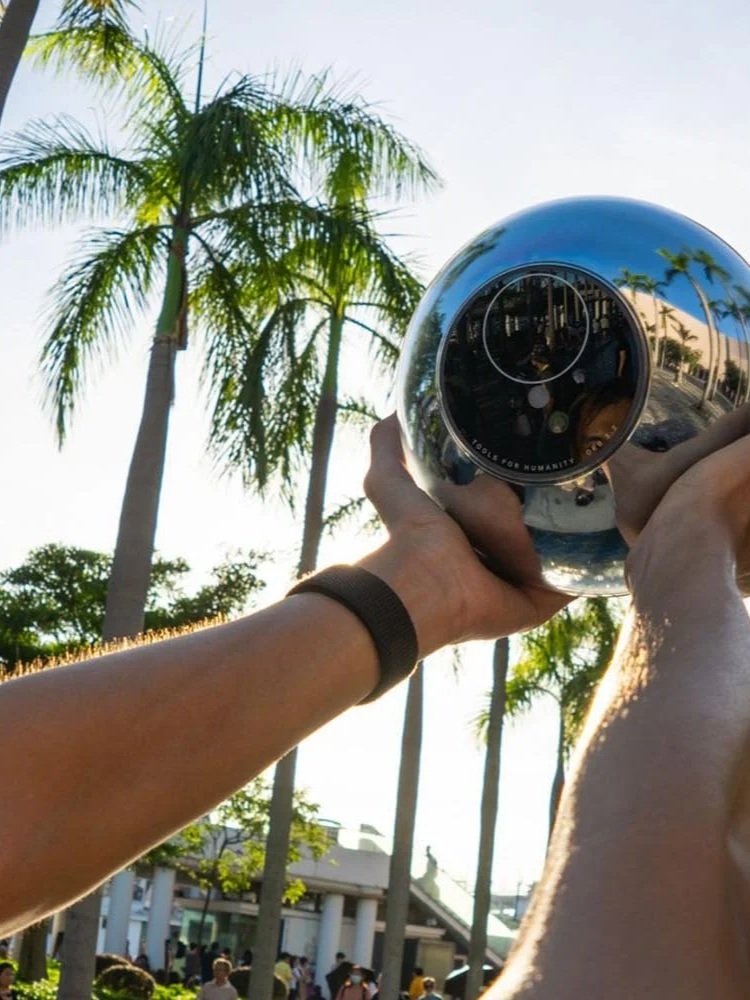
In April 2026, Sam Altman walked onstage in San Francisco to announce the next phase of Tools for Humanity, his startup whose flagship product is a beach-ball-sized device called the Orb that scans your iris to issue a cryptographic credential called a World ID. The pitch: portable, verifiable, biometric proof you are a human being, usable across the internet. The April announcement came with new partnerships across Tinder, Zoom, DocuSign, and Shopify. Tinder users in the US can now display a "verified human" badge on their dating profiles. Zoom is integrating a tool called Deep Face that verifies meeting participants are real people. Tools for Humanity reports 17.9 million World ID signups globally.
"Full-stack proof of human" is the company's own pitch language. Proof of humanity has graduated from aesthetics to plumbing. The contradiction is hard to miss. Altman simultaneously chairs OpenAI, the company most responsible for flooding the internet with AI agents and generative content, and Tools for Humanity, the company selling the receipt that proves you aren't one. The disease and the cure share a chairman.
The pattern across all these examples is the same. AI is sorting the influence economy into two tiers, and the price of proving you sit on the human side is being paid in real time at the talent layer, the cultural layer, and now the infrastructure layer. The hard question is the one nobody is asking: when AI clears the uncanny valley, will audiences still care that something was made by a human, or will the question stop mattering at all? The brands that win the next decade are the ones who treat that premium as a window, not a moat.