
The Changing Face of Influence, Part 4
The rules of influence have flipped: digital now shapes the real world, and AI is pushing that divide even further. As AI-generated slop floods our feeds with content that is endless, and feels hollow, audiences will crave what cannot be automated: the unexpected, the imperfect and the unmistakably human. Originality and taste will become the new currency that differentiates and stands out.
Through an eight-part series, Qulture is here to lead brands through this shift, defining the human-first storytelling and creative differentiation that will set the next era of influence
THE REHUMANIZATION OF IRL EXPERIENCES
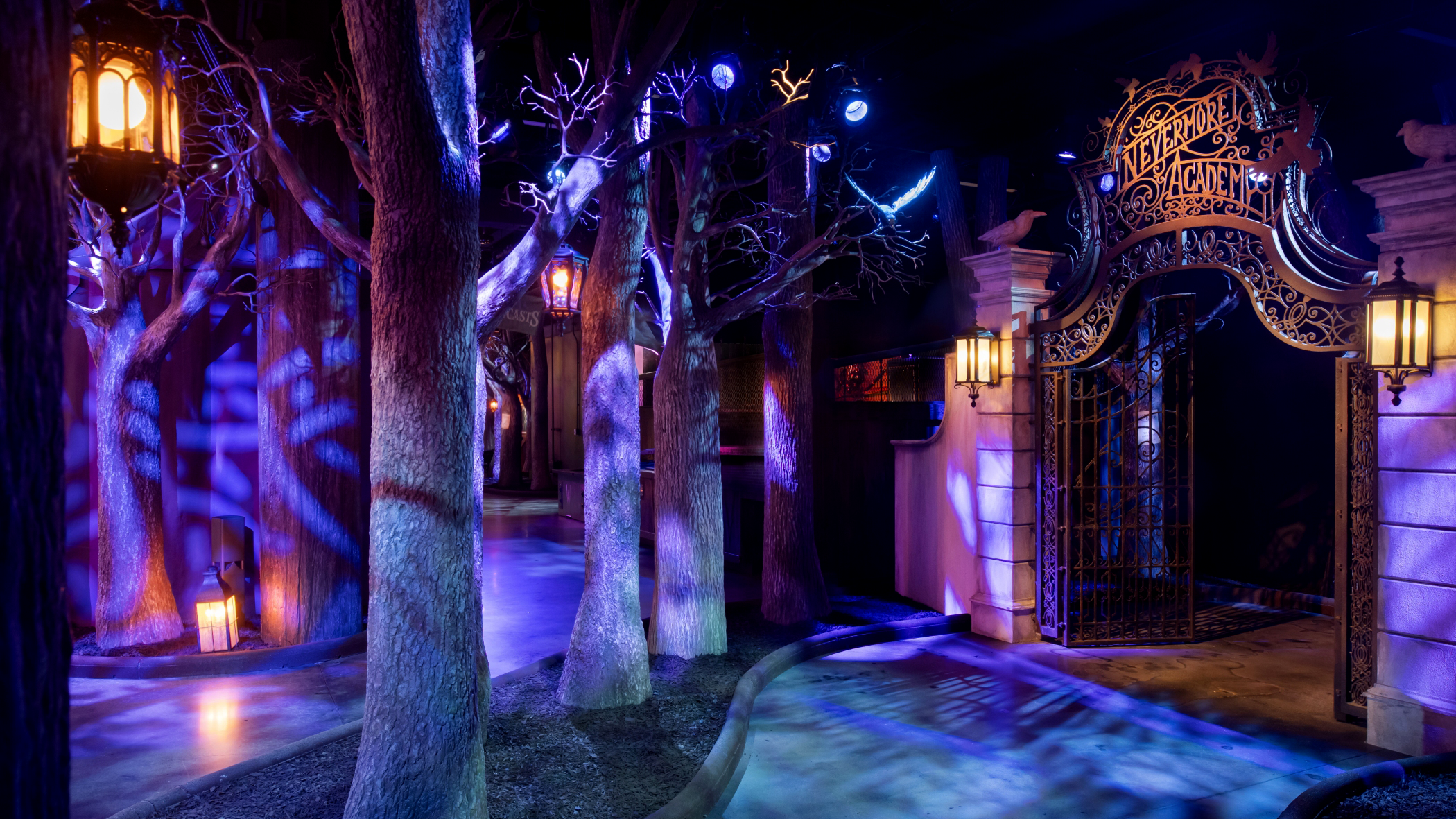
AI can generate ads in seconds. It cannot put you in a Squid Game escape room in a Pennsylvania mall. When Netflix converted a former Lord & Taylor space into its first permanent physical venue in November 2025, it arrived with intent: a full-scale walk-through replica of the Stranger Things Creel House, a Wednesday carnival, and nine holes of mini golf across years of beloved Netflix IP. A company famous for keeping you on the couch built an IRL experience to get you off it. The move makes sense. Sensory experiences that happen off the screen break through in ways the feed never will.
We now live most of our waking lives inside the Digital Second Space, a parallel reality of feeds, notifications, algorithmically curated content, and AI-generated everything. For a while, that space felt new. Increasingly, it feels like noise. Seventy-eight percent of Americans now say they prefer in-person social experiences to digital-only, and 81% of Gen Z say they actively wish they could disconnect more easily. Pinterest searches for “digital detox vision boards” were up 273% in 2025 alone.
The data points in one direction: audiences are treating physical presence as a correction to digital overwhelm, and the brands paying attention are responding with experiences that transform moments into memories.
Sensation as Strategy
Starbucks' summer roller rink pop-up in London and Manchester was built on a simple truth: people may forget what they were given, few forget what they did. Wheels under your feet, music loud enough to feel, and a Caramel Frappuccino in your hand; that kind of sensory imprint attaches to a brand in a way that no static campaign can.
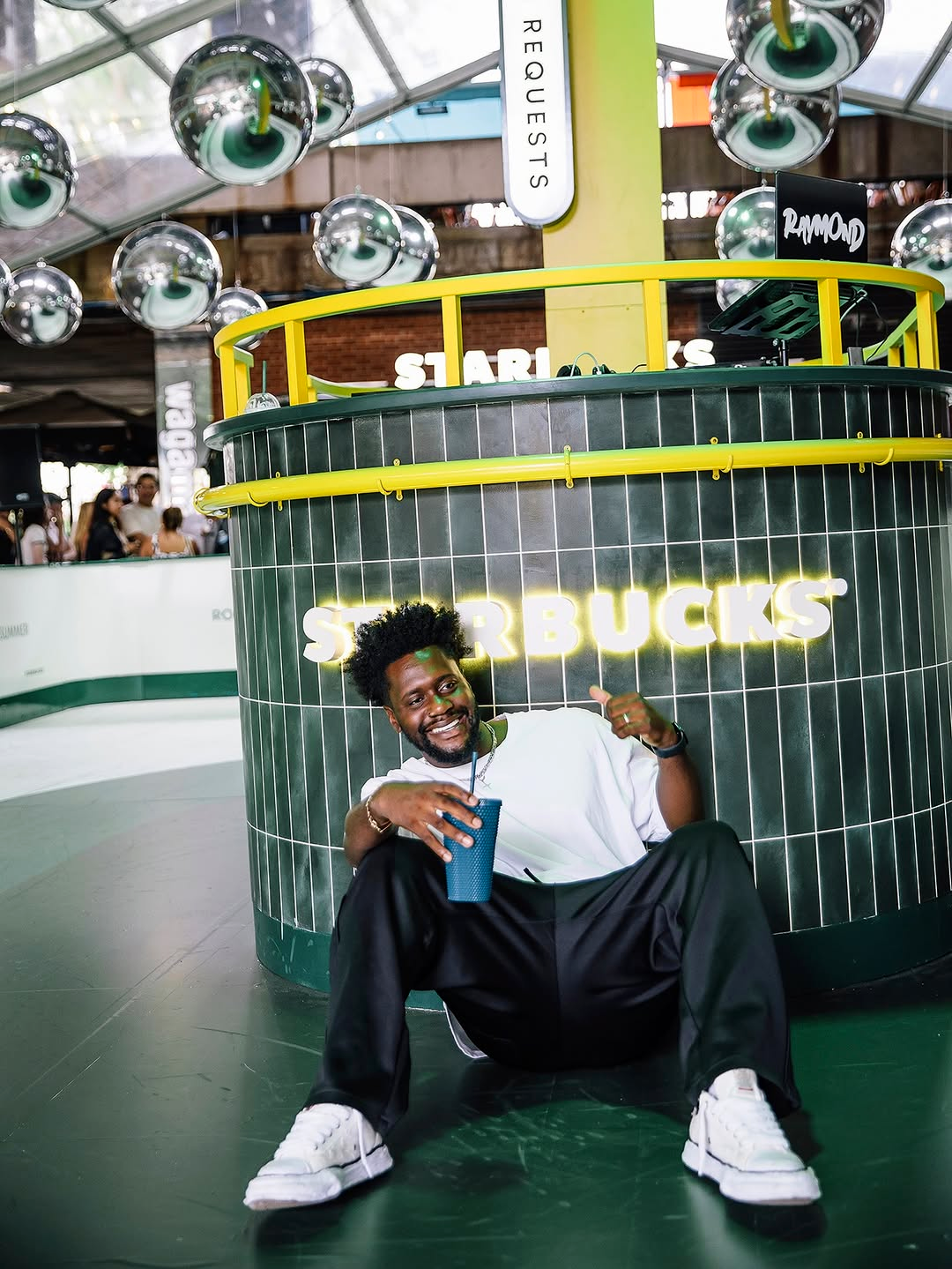
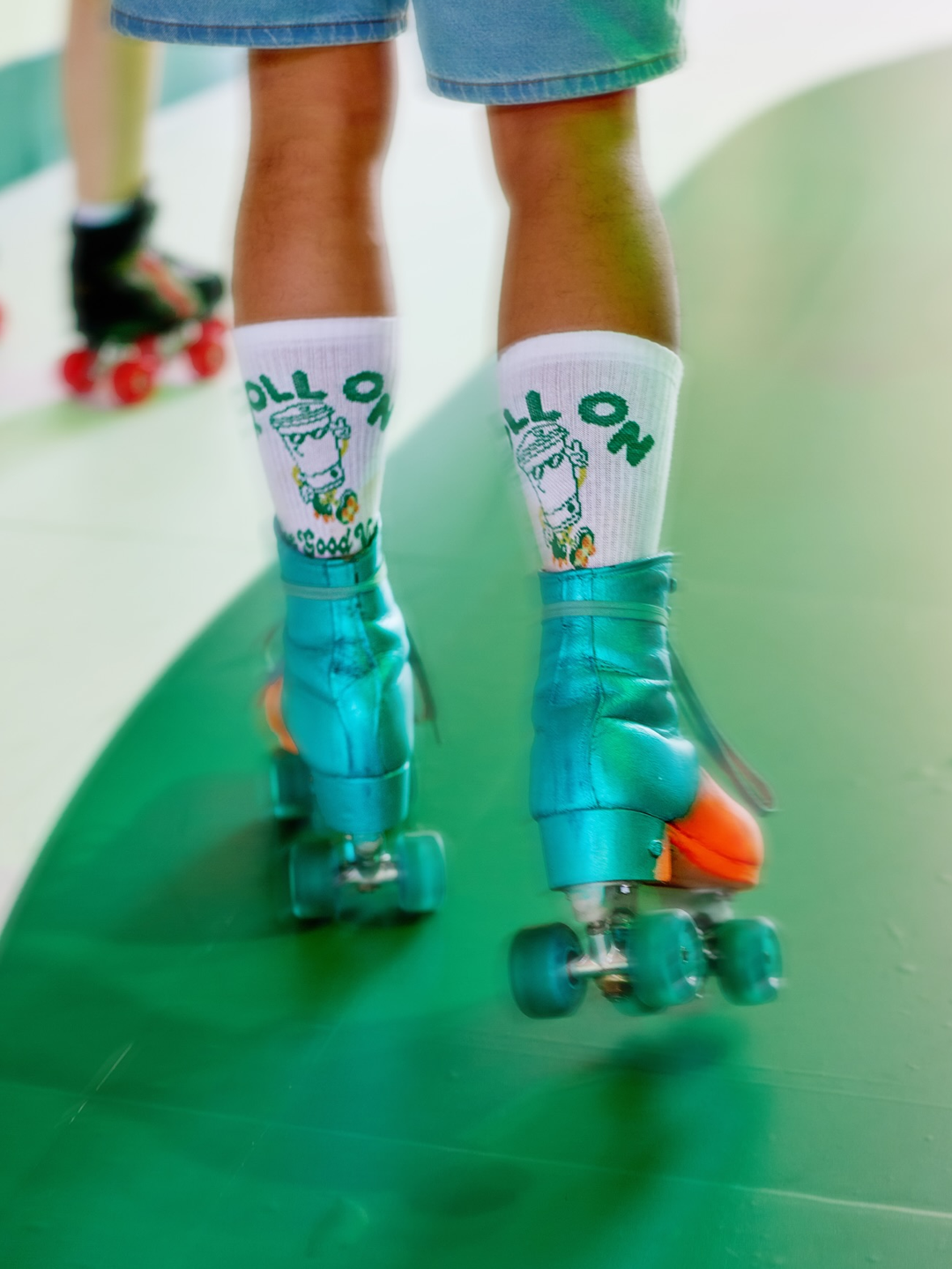
This experience worked because presence was the point. 46% of Gen Z are now actively limiting their screen time, and what they’re seeking is sensation. Starbucks gave each visitor up to 45 minutes of it in the rink. The photobooth generated organic proof that something real happened and gave attendees content worth posting. The claw machine sent Starbucks Rewards members home with a limited-edition physical souvenir designed by artist Gavin Connell, tied to a specific time and place.
Neuroscience explains why it works. Oxford research found that memory retrieval improves significantly when multiple senses are engaged, and that the brain can recall a complete memory when triggered by any single cue alone. Skating, music, a Frappuccino: three independent recall triggers built into a single hour, any one of which can unlock the whole experience.
The Body Begins Where the Pinboard Ends
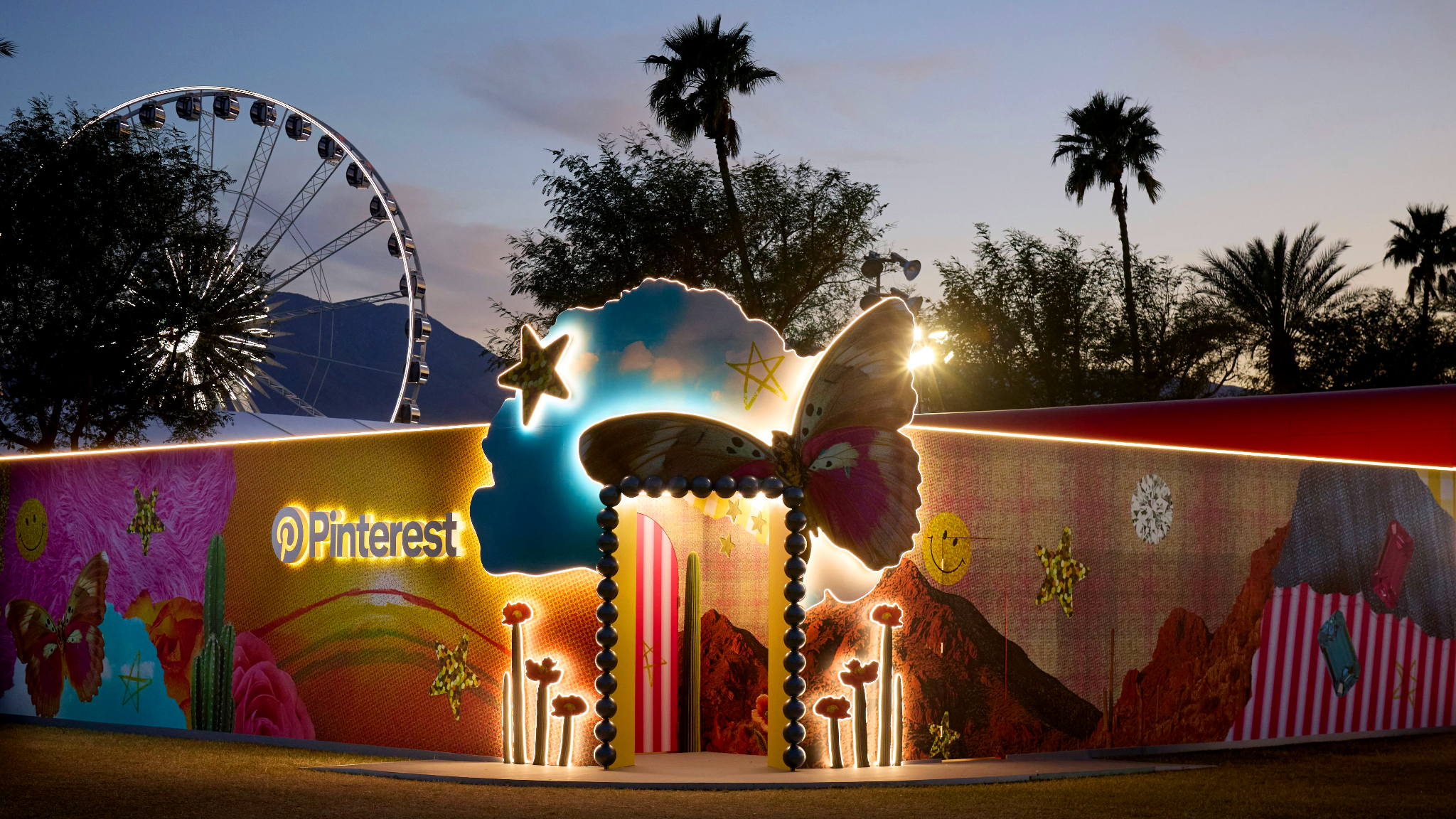
For the second consecutive year, Pinterest activated at Coachella with the Manifest Station: on-site stylists, professional photographers, interactive trend installations, and collages created by Chappell Roan’s creative director Ramisha Sattar.
Pinterest’s proposition is built on closing the distance between craving and consuming. The Manifest Station did exactly that: a stylist’s hands pinning fabric, a photographer adjusting your angle in the desert light, a look you’d been building on a board for weeks suddenly existing on your actual body in an actual place.
What Pinterest understood is that the connection is tactile. The desert heat, the specific light, the feeling of wearing something rather than saving it. Those are sensory anchors that a For You Page cannot replicate. In fact, 76% of Americans say physical experiences help them connect more deeply with brands.
The Radical Act of Stillness
For its Summer Reads activation, Miu Miu took over green spaces in Milan, Paris, Beijing, Hong Kong, and Osaka. No RSVP, no dress code, no ticket required. Visitors were handed limited-edition copies of novels by Simone de Beauvoir and Fumiko Enchi, each wrapped in Miu Miu-designed covers, bookmarks, and ex-libris stamps.
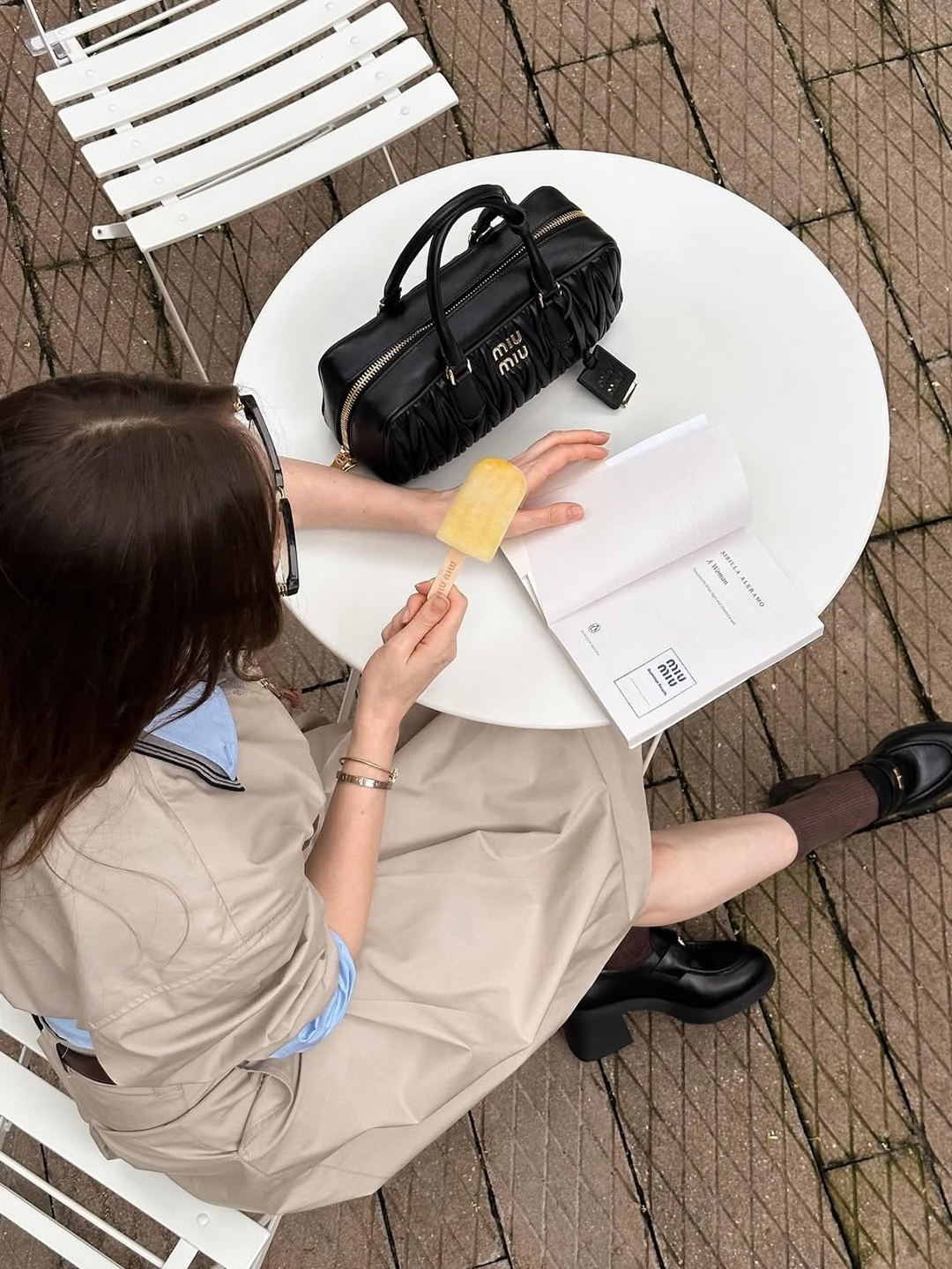
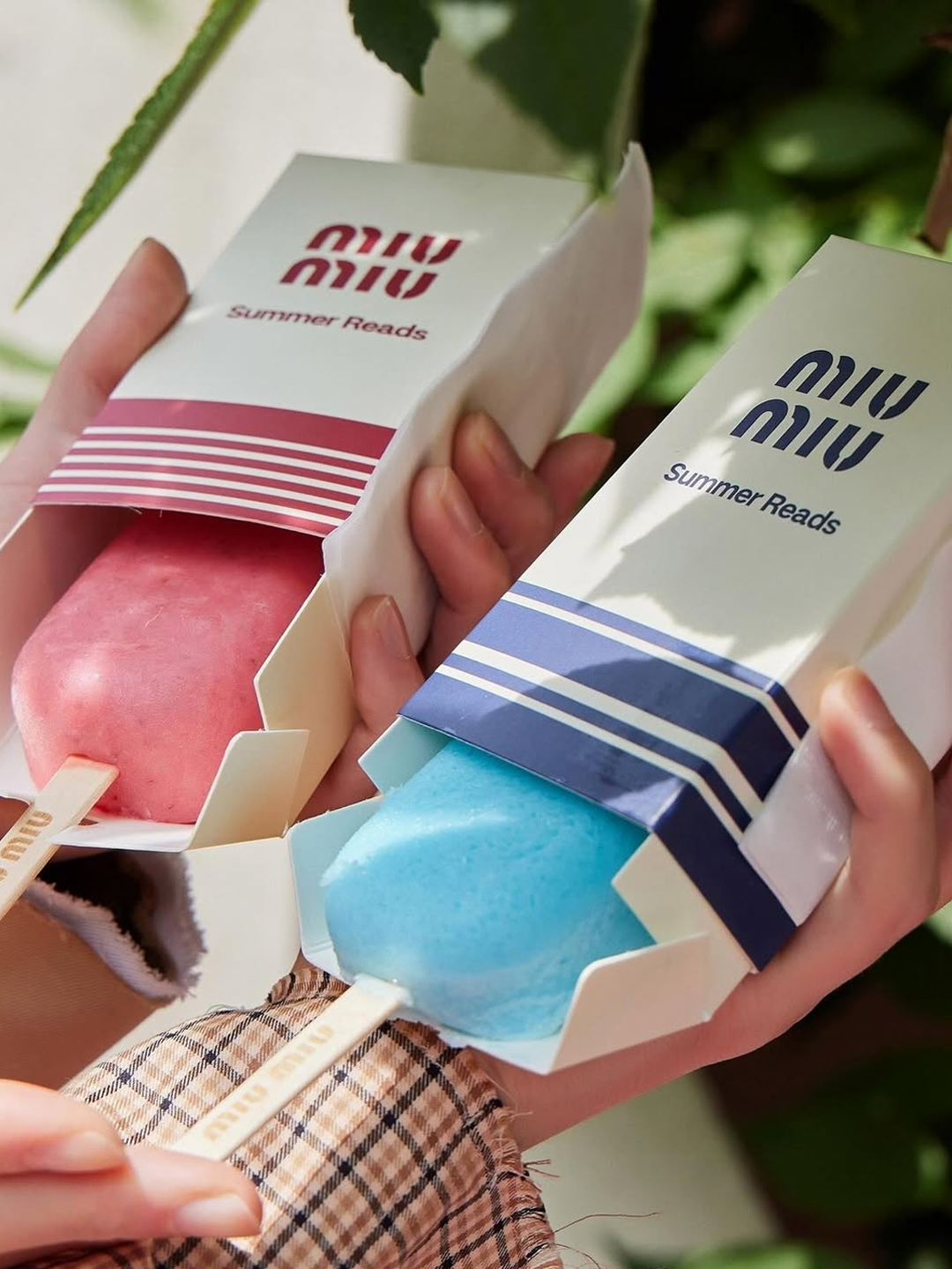
The grounding quality here was the point. Grass underfoot, paper in your hands, the particular stillness of reading somewhere beautiful. Miu Miu gave visitors a slow, tactile, unhurried encounter with an object made carefully for a specific occasion. What Miuccia Prada has long understood is that cultural authority accumulates through exactly this level of restraint. The Digital Second Space cannot give you a park bench in Paris and a novel with your name stamped inside it. That’s the gap Miu Miu built for.
The pattern across all three is the same. Each used physical presence to create something irreplaceable: a moment tied to a specific place and time. As AI proliferates and the digital world grows more detached from reality, physical connection is becoming the true luxury. Simply put, the body remembers what the feed forgets.